
Do you trust your instincts?
The strength found in letting go and embracing selflessness is rooted in trusting your instincts to act for the greater good, even when it means stepping back for the benefit of others.
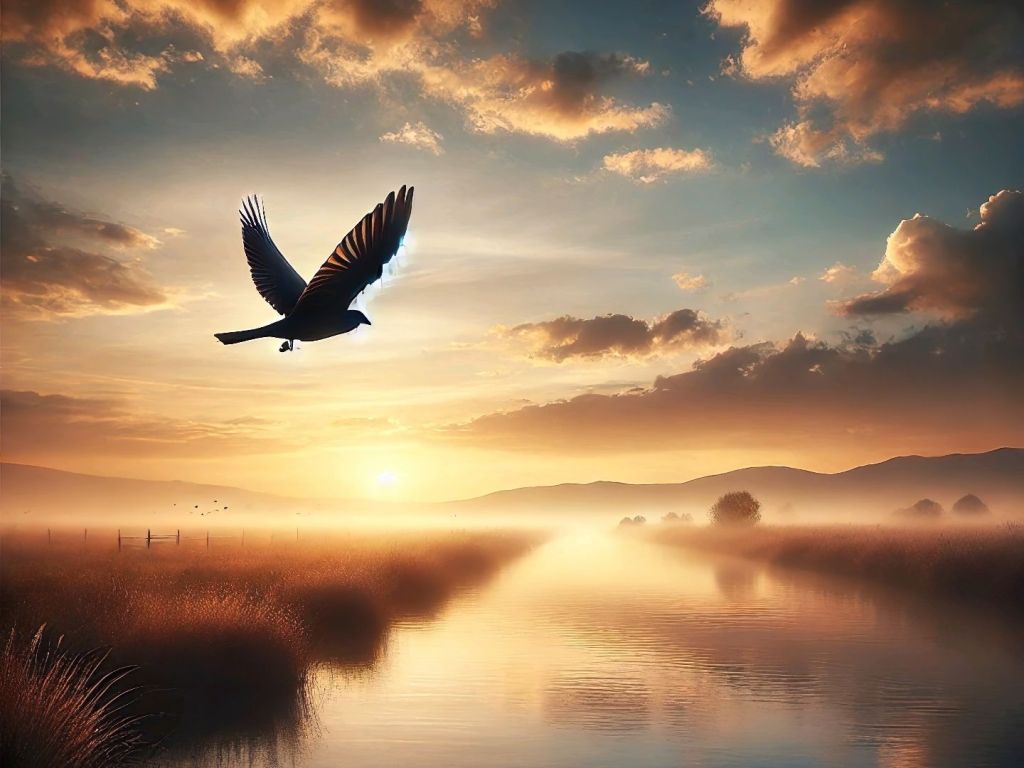
Imagine a flock of birds fleeing a predator. For the group to survive, one bird may break away, drawing the predator’s attention. This lone bird, sacrificing its safety, ensures the flock’s survival. This principle—where individual sacrifice sustains the collective—is a profound metaphor for a belief system grounded in interdependence and selflessness. It challenges the notion of individual gain, urging us to see ourselves as part of a greater whole.
This system rests on three pillars: selflessness, interdependence, and the understanding of consequences. Together, these pillars form a moral framework where the highest good emerges not from self-preservation but from the willingness to act for others.
Selflessness: The Paradox of Strength in Yielding
In the dilemma where one must sacrifice for the others to succeed, selflessness becomes an act of quiet courage. Picture a tree bending in the wind. Its flexibility allows it to withstand the storm, while rigid trees break. Similarly, the one who sacrifices embodies strength through yielding, understanding that self-interest often leads to collective failure. This paradox teaches that true power lies not in resistance but in the ability to let go.
An analogy can be drawn to water flowing around rocks. Water does not resist or struggle, yet its persistence shapes the landscape. In the same way, the one who sacrifices may seem to lose in the moment but shapes the future in profound ways. Their actions ripple outward, creating harmony for others.
Interdependence: A Web of Mutual Support
Consider a spider’s web, each thread connecting to the others. If one strand is cut, the entire structure weakens. In life, our actions are like those threads, intricately linked. The success of the whole depends on the strength of its parts. Acting selfishly is akin to severing those connections; the web collapses under the weight of discord.
This belief system teaches us to see the world as a network of relationships. The success or failure of one is bound to the success or failure of all. Just as a fire needs wood to burn, the collective needs the individual, and vice versa. To sacrifice is not to lose but to sustain the larger system of which we are all a part.
Understanding Consequences: Planting Seeds for the Future
Every action is a seed planted in the soil of time. A farmer who hoards all their seeds may eat well today but will starve tomorrow. The one who sacrifices a seed to the earth ensures future harvests for themselves and others. This metaphor illustrates the principle of long-term thinking, where individual loss today leads to collective gain tomorrow.
In the dilemma of three, all choosing selfishness leads to failure. It is like three people trying to cross a river with one raft but refusing to share. They end up stranded, victims of their own greed. Yet if one steps back and builds a bridge, the others cross, and the system progresses. The bridge-builder may not cross first, but their sacrifice ensures that no one is left behind.
A Belief System of Compassion and Wisdom
This belief system aligns deeply with the natural rhythms of life. It acknowledges that individual desires are fleeting, while collective well-being endures. By letting go of personal attachment, one aligns with a deeper truth: we are not isolated beings but threads in the fabric of existence.
In embracing sacrifice, we discover a greater purpose—one that transcends our own lives. Like a river that nourishes the land as it flows, our actions ripple outward, sustaining the world. The system is not about denying oneself but about realizing that true fulfillment comes from uplifting others. Through selflessness, interdependence, and understanding consequences, we find harmony not only with others but with the very essence of life itself.
Thus, the system teaches us that to sacrifice is not to lose but to become a part of something greater—a belief as timeless as the cycles of nature and as enduring as the human spirit.
 A Fool's Handbook